
Fabric for Loose Modestwear: 6 Essential Checks Beyond Drape
Fabric for loose modestwear needs to be assessed for how it falls and how it behaves against the body. Drape and cling are different properties: a fluid material can form elegant folds while still outlining the waist or hips. A larger garment size may provide more room, but it does not necessarily change that material behavior.
At Tara Garment, development discussions sometimes reveal this difference only after a sample is worn. Establishing the intended effect before sourcing helps a brand choose materials that support both movement and coverage.
Describe the silhouette you want: Send a reference image and your fit priorities to [email protected], or WhatsApp +86 133 9237 1667, for a material-development discussion.
1. Define what loose means for your design
Decide whether you want an oversized shape, a straight fall, a softly flowing garment or a semi-loose fit adjustable with a tie. These are different silhouettes. Specify the areas that should remain away from the body, such as the waist, hips or upper arms.
Reference images are useful, but consider whether they show movement, posing or a garment on a mannequin. Ask for a worn sample assessment under ordinary conditions rather than judging the intended fit from a single photograph.
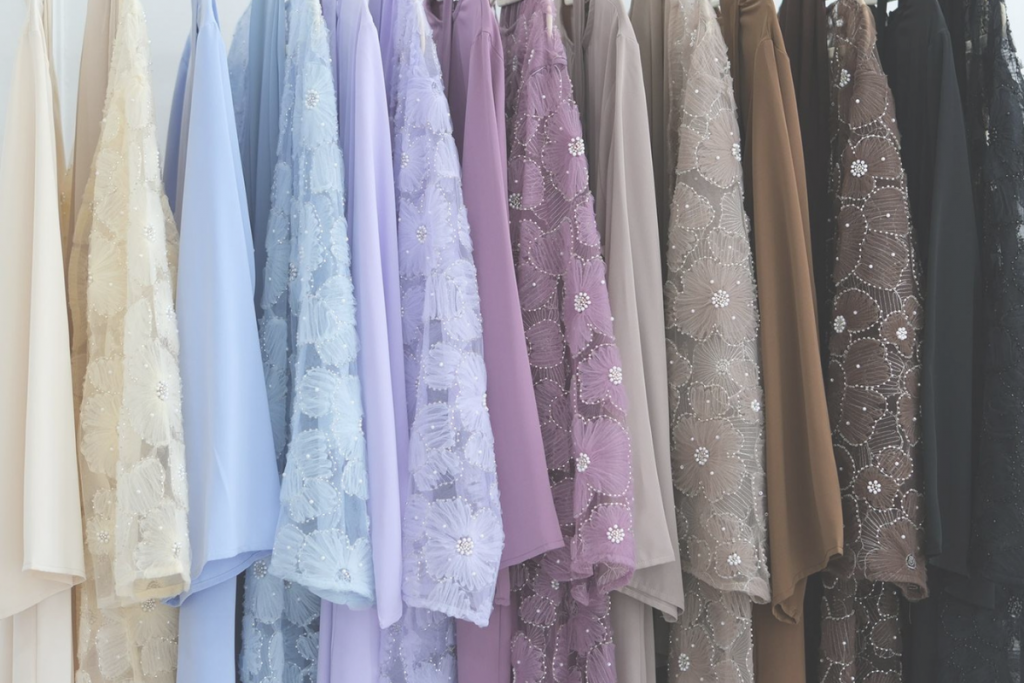
2. Compare drape and cling when choosing fabric for loose modestwear
Drape describes how material hangs and forms folds. Cling describes its tendency to lie close to the body or underlying clothing. Neither is established by fiber composition or GSM alone.
A heavier, fluid rib knit may hang closely against the body even with additional width. A material with more body may hold a shape farther away but produce a different feel and movement. Compare the actual options rather than assuming soft and flowing means loose in wear.
| Property | What to observe |
|---|---|
| Drape | Fold formation and movement |
| Cling | Contact with the body or underlayer |
| Stretch | Change under wearing tension |
| Structure | Ability to hold the intended shape |
| Opacity | Coverage in the actual color |
| Surface | Behavior against the chosen underlayer |
3. Test a larger piece of fabric
A small swatch is useful for hand feel but limited for evaluating a long dress or abaya. Inspect a larger piece hanging freely and resting against a comparable underlayer. Where possible, make a sample in the selected material.
Review from the front, side and back while standing and moving. Check the garment without pulling it into a preferred pose. Record where it hangs correctly and where it lies closer than intended.
Compare your fabric options: Email the specifications and design references, or send movement videos on WhatsApp +86 133 9237 1667.
4. Decide what pattern changes can achieve
Adding ease can reduce tightness and improve movement. The pattern team may also assess the position of seams, gathers, panels or ties. Those changes should preserve the intended balance rather than adding width everywhere without a plan.
However, a pattern adjustment cannot guarantee a new fabric behavior. If the material still hangs against the body after a fit review, a different construction or material may be necessary. Explain the priority clearly so the team can assess the appropriate change.

5. Assess lining as part of the garment
A lining can alter coverage, surface interaction and structure, but it also changes weight, warmth and construction. It should not be proposed as an automatic solution to every cling problem.
Test the chosen lining with the outer material. Partial and full lining create different effects, and a fitted lining may restrict an otherwise loose garment. Confirm both the wearing fit and the interior finish before approval.
Need to review lining or construction? Email the areas requiring coverage and the desired fit, or contact us on WhatsApp +86 133 9237 1667.
6. Approve substitutions before production
If the first fabric does not deliver the silhouette, compare alternatives against your essential requirements. Changing from a fluid knit to a material with greater body can alter stretch, movement, texture and pattern needs.
Do not approve a replacement only because its color is similar. Reassess the sample, care requirements, availability and quotation. Keep a labeled swatch and the final specification so bulk production uses the approved material.
What to tell your manufacturer
Share your design, intended fit, sample measurements, preferred fiber content and target color. Explain whether softness, drape, coverage or distance from the body is most important. Identify whether you are willing to change the material, pattern or both.
If there is a physical garment that demonstrates the desired result, bring it to a development meeting or discuss how to provide it. That reference can communicate the relationship between fabric and fit more clearly than a fabric name.
Frequently asked questions
Will ordering a larger size stop a garment from clinging?
It may improve room, but it does not necessarily change the material’s tendency to lie against the body. Assess the fabric and pattern together.
Is woven fabric always better than knit for modestwear?
No. Both categories contain materials with different properties. Choose according to the actual garment and sample result.
Can a fluid dress remain semi-loose with an adjustable waist?
It may be achievable with suitable fabric, ease and tie placement. Confirm the effect in a worn sample before production.
Review your modestwear fabric with Tara Garment
Find suitable fabric for loose modestwear: Send your references, proposed fabric and fit concerns to [email protected], or WhatsApp +86 133 9237 1667. We will discuss which material or construction options need testing.