
Custom Abaya Sample: 6 Essential Steps Before Bulk Production
A custom abaya sample turns your design brief into a garment that can be assessed for fabric, coverage, silhouette, construction and finish. For a brand targeting the UAE, GCC or international modestwear market, it is the stage where you confirm whether the proposed materials and pattern deliver the intended result before placing a bulk order.
At Tara Garment, we develop customers’ original designs rather than offering their collections as a public catalog. A successful sample starts with a clear understanding of which details are essential to your brand.
Ready to develop your first abaya? Email your design references, or message Tara Garment on WhatsApp: +86 133 9237 16677, with the sample size and proposed bulk quantity.
1. Define the brief for your custom abaya sample
Send front and back views, detail images, measurements or a fit reference, fabric preferences and color. Mark any design features that cannot change, such as a structured waist, layered hem, embroidery placement or concealed closure.
Descriptions such as “premium Dubai style” help explain the market position, but they need specific construction and material choices. Clarify the silhouette, opacity, finish and level of detail that matter to you. A tech pack is useful; if you do not have one, the missing specifications still need to be agreed.
2. Select fabric against the design
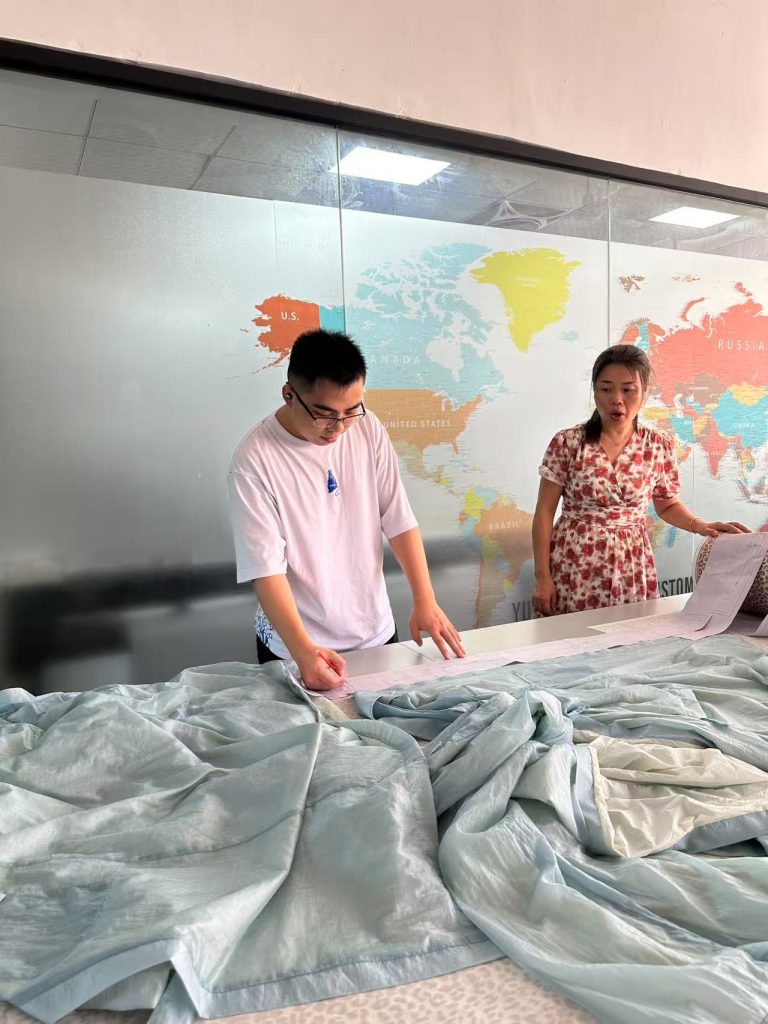
A flowing chiffon sleeve and a structured bodice may require different material behavior. A lining can improve coverage but also changes weight and movement. Confirm composition, approximate GSM, usable width, color and availability before cutting.
Evaluate a physical swatch where possible. Video can show movement, but it cannot fully communicate hand feel or opacity in different lighting. The custom abaya sample should be assessed in the intended material, with any substitutions identified clearly.
3. Test the details that carry uncertainty
Embroidery, beadwork, unusual lace and invisible fastening systems need practical checks. Decoration can affect how a garment hangs, while a concealed magnetic closure may behave differently when covered by fabric. A layered or irregular hem also needs assessment for construction and movement.
AI-generated reference images can communicate a concept, but may show shapes or details that do not translate directly into sewing. Testing a key detail before completing the whole garment can reveal whether a revised construction is needed.
Is one detail central to your design? Email a close-up and your requirements, or send it on WhatsApp: +86 133 9237 16677, so we can assess what needs a test.
4. Check the fit and coverage together
For modestwear, approval should include both proportions and practical coverage. Review the neckline, sleeve opening, body ease and hem length when worn, rather than only on a hanger. Check whether the fabric pulls, opens or becomes more transparent in movement.
If the collection includes petite, regular, tall or a wide size range, explain the intended customer measurements. Changing length alone is not always enough. Widths and other proportions may need adjustment to preserve the approved silhouette across sizes.
5. Agree on the sample communication process
Set useful review points: material confirmation, tests for important details, sample completion and fit feedback. Development photos can help clarify construction, but a finished physical sample remains important for judging feel and fit.
Provide one organized set of comments with front, side and back photos. State the required changes using measurements wherever possible. New design requests can change the development scope, cost and schedule, so distinguish them from corrections to the agreed brief.
Want a clear sample-development plan? Email your priority checks and target date, or contact us on WhatsApp: +86 133 9237 16677.
6. Confirm the production specification
Once the sample is approved, confirm the final measurements, fabric, decoration, labels, packaging and quantity per style and color. Bulk pricing and timing should reflect those specifications. Sampling is commonly around two weeks for a regular style, while complex construction or supplier testing can take longer; we confirm timing after review.
Do not assume that a photo-ready sample means bulk production is ready to ship. Material purchasing, decoration, sewing, QC and packaging still need their own schedule.

What should be approved before bulk production?
| Area | Approval needed |
|---|---|
| Fabric | Actual material, color and lining |
| Fit | Base measurements and size plan |
| Details | Closure, trim and decoration |
| Finish | Seams, hems and appearance |
| Branding | Label artwork and placement |
| Order | Quantity per style/color and final quotation |
Frequently asked questions
Can I make one custom abaya sample before ordering bulk?
Yes, we can review a single development sample as the first stage of a planned collection. The fee depends on the design and work required.
Can you reproduce every reference detail exactly?
We assess the reference and identify details that need testing. Fabric availability and physical construction can affect the result, so we should not promise an exact match before development.
Can you show other brands’ designs?
We protect customer designs, including projects without an NDA. A video meeting can help demonstrate workmanship and factory capabilities while respecting confidentiality.
Start your abaya development with Tara Garment
Request a custom abaya sample review: Send your design, fabric preferences, sample measurements and planned quantities to [email protected], or WhatsApp +86 133 9237 16677. We will advise what to confirm before sampling.